
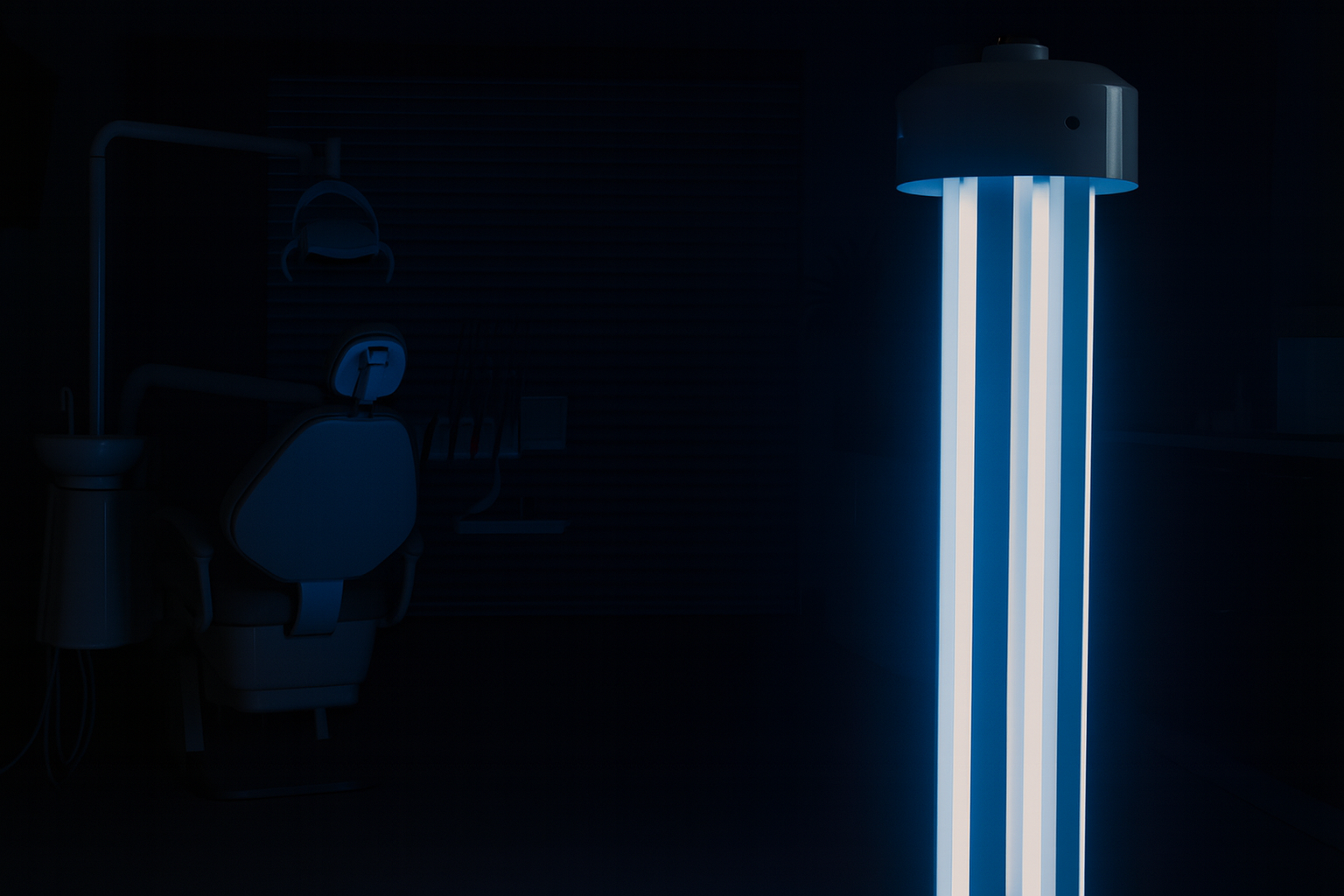
Maintaining a clean and hygienic environment is essential for every dental clinic. Dentists, hygienists, assistants, and patients come into contact with dental chairs, instruments, treatment rooms, and frequently touched surfaces throughout the day. Without proper cleaning and disinfection procedures, these areas can become potential sources of microbial contamination.
Using the right dental clinic disinfection equipment helps dental practices maintain better hygiene standards and support safer treatment environments. From manual cleaning supplies to advanced UV-C disinfection technology, dental clinics can use different solutions as part of a structured infection control programme.
Why Is Disinfection Important in Dental Clinics?
Dental procedures often involve contact with saliva, blood, and other potentially infectious materials. This makes infection prevention an important part of daily clinic operations.
Proper cleaning and disinfection help dental professionals:
- Reduce microbial contamination on suitable surfaces.
- Maintain hygienic treatment rooms between appointments.
- Support patient and staff safety.
- Follow recommended infection prevention procedures.
- Build patient confidence in the clinic’s hygiene practices.
Dental clinics should follow applicable infection control guidelines and use products and equipment according to their intended purpose.
Essential Dental Clinic Disinfection Equipment
Different areas of a dental practice require different cleaning and disinfection methods. Selecting appropriate equipment helps create a consistent hygiene routine.
1. Surface Disinfection Equipment
Dental chairs, countertops, workstations, door handles, and other frequently touched surfaces require regular cleaning and disinfection.
Suitable surface disinfectants and approved cleaning equipment help dental staff manage contamination risks. Always check product compatibility with the surface and follow the manufacturer’s instructions for application and contact time.
2. Dental Instrument Sterilisation Equipment
Reusable dental instruments that penetrate soft tissue or contact other critical areas require appropriate cleaning and sterilisation procedures.
Autoclaves are commonly used to sterilise heat-resistant dental instruments. Instruments should be cleaned, packaged, sterilised, and stored according to relevant dental infection control guidelines.
It is important to understand that surface disinfection and instrument sterilisation serve different purposes and should not be treated as interchangeable processes.
3. UV-C Disinfection Equipment
UV-C technology is another option that dental clinics may consider as part of their environmental hygiene strategy.
UV-C light can help inactivate susceptible microorganisms when the correct wavelength, exposure time, and dose reach the target area. It can be used as an additional disinfection method for suitable exposed surfaces and spaces.
However, UV-C effectiveness depends on several factors, including distance, shadows, surface conditions, and exposure duration. It does not replace routine cleaning or the sterilisation of dental instruments.
4. Portable Disinfection Systems
Portable disinfection equipment can help clinics address different treatment rooms and suitable shared spaces.
Depending on the system, portable units may support targeted disinfection routines and provide flexibility where fixed equipment is not practical.
Dental practices should select equipment based on room size, intended application, safety requirements, and manufacturer guidance.
How UV-C Technology Supports Dental Clinic Hygiene
UV-C technology offers an additional approach to environmental disinfection. It works by exposing susceptible microorganisms to ultraviolet light at germicidal wavelengths, disrupting their ability to function and reproduce.
For dental clinics, appropriately designed UV-C systems may support disinfection routines in:
- Dental treatment rooms
- Waiting areas
- Consultation rooms
- Shared clinical spaces
- Suitable exposed surfaces
The treatment area must be prepared according to the equipment’s safety instructions. Direct exposure to germicidal UV-C can harm human eyes and skin, so conventional unshielded systems should only operate when people are safely excluded from the exposure area. Appropriate shielding, interlocks, and safety controls are important where applicable.
What to Consider When Choosing Dental Clinic Disinfection Equipment
Choosing the right equipment requires more than comparing prices or technical specifications. Dental practices should consider how each system fits into their existing infection prevention procedures.
1. Intended Application
Identify whether the equipment is designed for instruments, surfaces, air, or room disinfection. A product should only be used for applications supported by its manufacturer.
2. Safety Features
Look for suitable safety mechanisms, clear operating instructions, and protective features. For UV-C equipment, consider motion sensors, automatic shut-off functions, shielding, and access controls where relevant.
3. Ease of Operation
Dental staff often work with tight appointment schedules. Equipment should be straightforward to operate, maintain, and incorporate into daily cleaning routines.
4. Coverage and Disinfection Time
For UV-C systems, consider room dimensions, device placement, exposure time, and the possibility of shadows. Follow the manufacturer’s validated operating procedures rather than assuming that one cycle is suitable for every room.
5. Maintenance and Reporting
Regular maintenance helps ensure equipment continues to operate as intended. Systems with digital reporting or operating records may also help clinics document their disinfection procedures.
How MUVi Supports Advanced Disinfection Solutions
Dental clinics looking to explore additional environmental disinfection technology can consider solutions from MUVi. MUVi focuses on UV-C disinfection technology designed for different professional environments.
Its solutions include:
- RUVi UVC Robot: An autonomous UV-C disinfection robot designed to navigate suitable environments and support programmed disinfection routines.
- MUVi Quad Light: A portable UV-C system for suitable disinfection applications.
- MUVi Booth: An enclosed UV-C disinfection solution designed for controlled applications.
- MUVi ViRaTon: A technology designed for continuous air and surface disinfection under its intended operating conditions.
The suitability of each product for a dental clinic should be confirmed with MUVi based on the intended application, room requirements, operating conditions, and applicable safety standards.
Best Practices for Dental Clinic Disinfection
Even with advanced equipment, consistent infection prevention procedures remain essential.
Dental clinics should:
- Clean and disinfect clinical contact surfaces between patients using appropriate products.
- Sterilise reusable instruments according to established guidelines.
- Follow hand hygiene and personal protective equipment requirements.
- Maintain separate procedures for instruments, surfaces, and environmental disinfection.
- Train staff to operate disinfection equipment safely.
- Keep records of cleaning, sterilisation, maintenance, and relevant disinfection cycles.
- Review infection control procedures regularly and update them when required.
Combining these practices with suitable technology can help dental clinics maintain a more organised hygiene programme.
Conclusion
Choosing suitable dental clinic disinfection equipment is an important part of maintaining a hygienic dental practice. From surface disinfectants and autoclaves to portable UV-C systems and autonomous disinfection robots, each solution has a specific role in infection prevention.
MUVi offers UV-C disinfection technologies that clinics can explore as an additional part of their environmental hygiene strategy. By selecting equipment carefully and following established safety procedures, dental practices can support consistent cleaning and disinfection while maintaining a safer environment for patients and staff.